
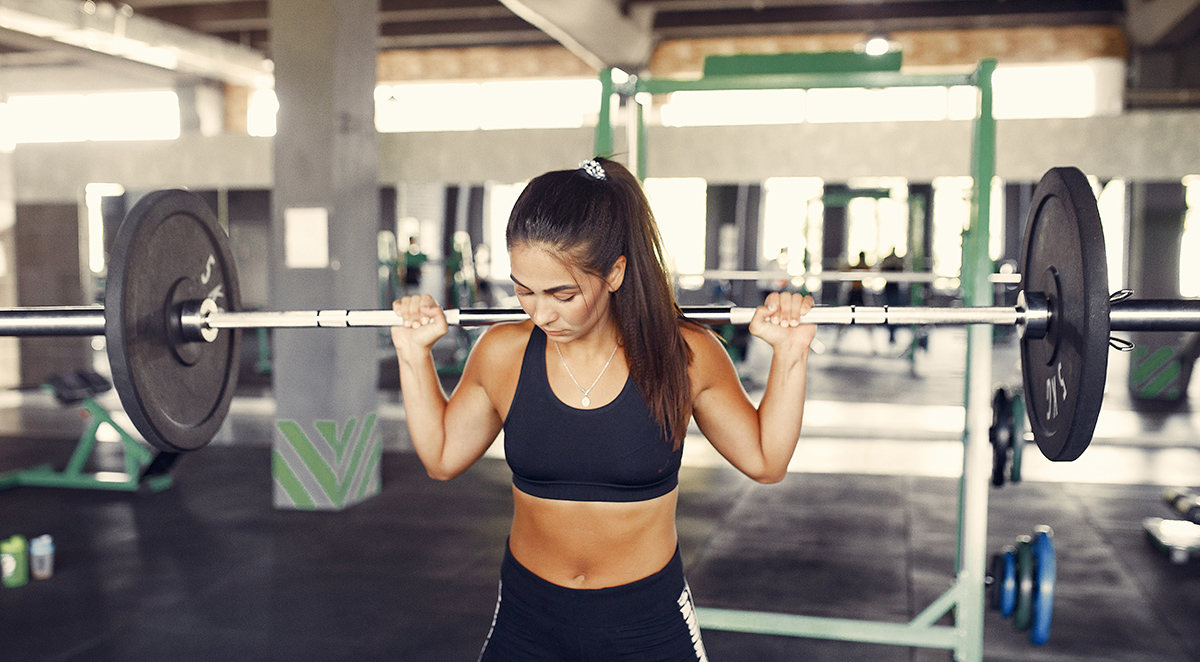

It is one of the most persistent myths in fitness, and it stops women from training in the way that would actually serve them best. The fear goes something like this: if I lift heavy weights, I will bulk up, lose my femininity, or end up looking like a bodybuilder. The result is that countless women stick to light dumbbells and cardio machines, wondering why their bodies are not changing the way they want them to.
The science is clear, and it has been for decades. Lifting heavy will not make women bulky. What it will do is build strength, improve body composition, boost metabolic rate, protect bone density, and produce the lean, capable physique that most women actually want. The myth persists not because of evidence, but because of a misunderstanding of how female physiology actually works.
At WNC Barbell, women train under the bar every day in a facility and culture built to support them. This article lays out the truth about women and strength training, so you can stop letting a myth keep you away from the most effective training tool available to you.
Quick Summary
- Women lack the testosterone levels needed to build the kind of mass that the “bulky” fear is based on.
- Lifting heavy instead produces increased skeletal muscle mass, lower body fat percentage, higher basal metabolic rate, and stronger bones.
- The women who look exceptionally muscular in fitness media train for years with precise nutrition and, often, pharmacological support.
- For the average woman who picks up a barbell, the outcome is a leaner, stronger body, not a larger one.
- This article covers the physiology behind that, what heavy training actually produces, and why the environment at WNC Barbell makes it easier to get started.
Why Women Will Not Bulk Up from Lifting Heavy
The primary driver of large-scale muscle growth is testosterone. Men produce roughly ten to twenty times more testosterone than women, which is why male athletes can gain muscle mass at a rate women simply cannot match, even with identical training. The physiological capacity for the kind of bulk most women fear is not present in the female endocrine system without significant hormonal intervention.
Research published in the Journal of Applied Physiology consistently shows that women who follow progressive resistance training programs increase strength substantially, often matching or exceeding men on a pound-for-pound basis, while gaining a fraction of the absolute muscle mass. The adaptation in women skews heavily toward strength, neuromuscular efficiency, and improved body composition rather than mass accumulation.
When a woman lifts heavy and her body changes visibly, what she is seeing is not bulk. It is increased muscle density and reduced body fat. The muscles become more defined precisely because they are growing denser while the layer of fat over them decreases. That is the opposite of bulk. That is the aesthetic outcome most women describe wanting when they say they want to “tone up.”
What Heavy Lifting Actually Does for Women
Setting aside what it does not do, here is what consistent, progressive strength training does produce for women.
1. Improved Body Composition
Muscle is metabolically active tissue. Every pound of skeletal muscle you carry burns additional calories at rest, every hour of every day. Building muscle through heavy lifting raises your basal metabolic rate, which makes it easier to maintain a healthy body composition long-term without extreme dietary restriction. Women who rely exclusively on cardio for fat loss often find that their metabolism adapts downward over time, making sustained results harder to achieve. Women who lift keep their metabolic rate elevated.
2. Stronger Bones
Osteoporosis disproportionately affects women, particularly after menopause when estrogen levels drop and bone density loss accelerates. Resistance training is one of the most effective interventions known for building and maintaining bone density at any age. Placing mechanical load on bones through heavy lifting stimulates the bone remodeling process, increasing density and reducing fracture risk. This is a health outcome with consequences that extend decades into the future.
3. Functional Strength for Real Life
There is nothing abstract about the strength built through deadlifts, squats, and presses. It translates directly to how you move through the world: carrying groceries, managing children, avoiding injury, recovering faster from physical demands. Women who strength train consistently report feeling more capable, more confident, and more physically resilient across every area of their lives.
4. Better Mental Health and Confidence
The research on resistance training and mental health outcomes is robust. Studies show meaningful reductions in anxiety and depression symptoms with consistent strength training, effects comparable to or exceeding those of aerobic exercise in some populations. Beyond the biochemical responses, there is something straightforwardly empowering about getting stronger. Hitting a new personal record on a lift, feeling a movement click into place, seeing your InBody scan show increases in skeletal muscle mass month over month: these experiences build a relationship with your body that is about what it can do rather than only how it looks.
The Women You See in Fitness Media Are Not the Average Outcome
The “bulky” concern is often rooted in images of female bodybuilders or physique competitors. It is worth being direct about this: those women have spent years, often a decade or more, training specifically for maximum muscle mass with precise nutritional support and, in many cases, anabolic compounds not available over the counter. Their physiques are not an accidental byproduct of picking up heavier weights. They are a deliberate, sustained, years-long project.
For the woman who trains three to four days per week with progressive overload, the outcome is not a competitive bodybuilder physique. It is a stronger, leaner, more capable version of her current self. The gap between those two outcomes is enormous, and it does not close by accident.
Finding the Right Environment Makes All the Difference
Knowing the science is one thing. Walking into a gym and actually doing the work is another, and environment matters enormously.
Many women who have trained at commercial gyms describe the experience of feeling watched, out of place, or uncertain about whether they belong in the free weights area. That discomfort is real, and it is a legitimate barrier. A gym culture that is genuinely welcoming to women is not just a nice-to-have. It is what makes the difference between a woman who tries strength training once and a woman who sticks with it long enough to see what it can do.
WNC Barbell member Eric Z put it simply in his Google review: “everybody is Respectful and nobody stares at you working out like they do at some other Gyms.” That single observation captures something important about why gym culture matters, and why WNC Barbell draws a different kind of membership.
Lindsay G., who found WNC Barbell after moving to Asheville, described it this way: “This is a legit gym for people who want to put in serious work. Great atmosphere all around.”
WNC Barbell’s culture is shaped in part by female leadership throughout the organization. The training staff includes women who bring genuine expertise in strength programming for female athletes and who understand firsthand what it feels like to step under the bar for the first time. That representation is not incidental. It creates an environment where women can train seriously without feeling like guests in someone else’s space.
What to Expect When You Start Lifting Heavy
If you have been holding back from the squat rack or the deadlift platform, here is a realistic picture of what the first few months look like.
Month 1
Weeks one through four are primarily about learning. Your nervous system is adapting to the movement patterns, your technique is developing, and your body is responding to a new stimulus. You will likely feel stronger quite quickly even before significant muscle development occurs, because much of early strength gain is neurological.
Months 2-4
Months two through four are where body composition changes become visible. InBody scans in this window often show skeletal muscle mass beginning to rise while body fat percentage trends down, even without significant changes in body weight. This is the phase where the scale is the least useful metric and where InBody scanning provides the data that actually reflects what is happening.
Month 6+
By month six, women who have trained consistently report changes that go beyond the physical: confidence in the gym, ease with movements that once felt intimidating, and a fundamentally different relationship with physical effort.
WNC Barbell’s personal training team can accelerate that process considerably. Having a trainer who understands how to program for women, how to cue technique effectively, and how to progress load safely removes the guesswork and shortens the learning curve significantly.
Frequently Asked Questions
Will I bulk up if I lift heavy weights as a woman?
No. Women do not have sufficient testosterone levels to build large-scale muscle mass through standard strength training. What heavy lifting produces for women is increased muscle density, reduced body fat, a higher metabolic rate, and stronger bones. The visible result is a leaner, more defined physique, not a larger one.
How heavy should I actually be lifting?
Heavy is relative to your current strength. A useful guideline is that your working sets should feel genuinely challenging in the last two to three repetitions. If you can complete your sets without much effort, the weight is not heavy enough to drive meaningful adaptation. A personal trainer at WNC Barbell can help you identify appropriate starting loads and progress them safely.
How long before I see results from strength training?
Strength improvements are often noticeable within the first two to four weeks as your nervous system adapts. Visible body composition changes typically begin appearing at six to twelve weeks of consistent training. InBody scans will show changes in skeletal muscle mass and body fat percentage before those changes are obvious in the mirror.
Is WNC Barbell a welcoming gym for women who are new to lifting?
Yes. WNC Barbell has female coaches on staff, female leadership in the organization, and a training culture that is explicitly oriented toward making every member feel capable and welcome. The gym draws serious athletes of all genders, and the culture reflects mutual respect rather than the intimidating atmosphere common in heavily male-dominated facilities.
How do I get started with strength training for women at WNC Barbell?
Reach out through our contact page to learn about membership options and personal training. We will connect you with a trainer whose background fits your goals and get you started with a program built for you.
Strength training is the most effective tool available for changing your body composition, protecting your long-term health, and building genuine physical confidence. The only thing standing between you and those outcomes is the myth. Contact WNC Barbell today and let us show you what lifting heavy actually does.